A different history of computing

What if nobody won the computer wars?

IBM keeps OS/2 in the fight. Novell remains a force. Microsoft still leads, but the future no longer looks inevitable.

The Kindle edition is available now

Enter the alternate timeline
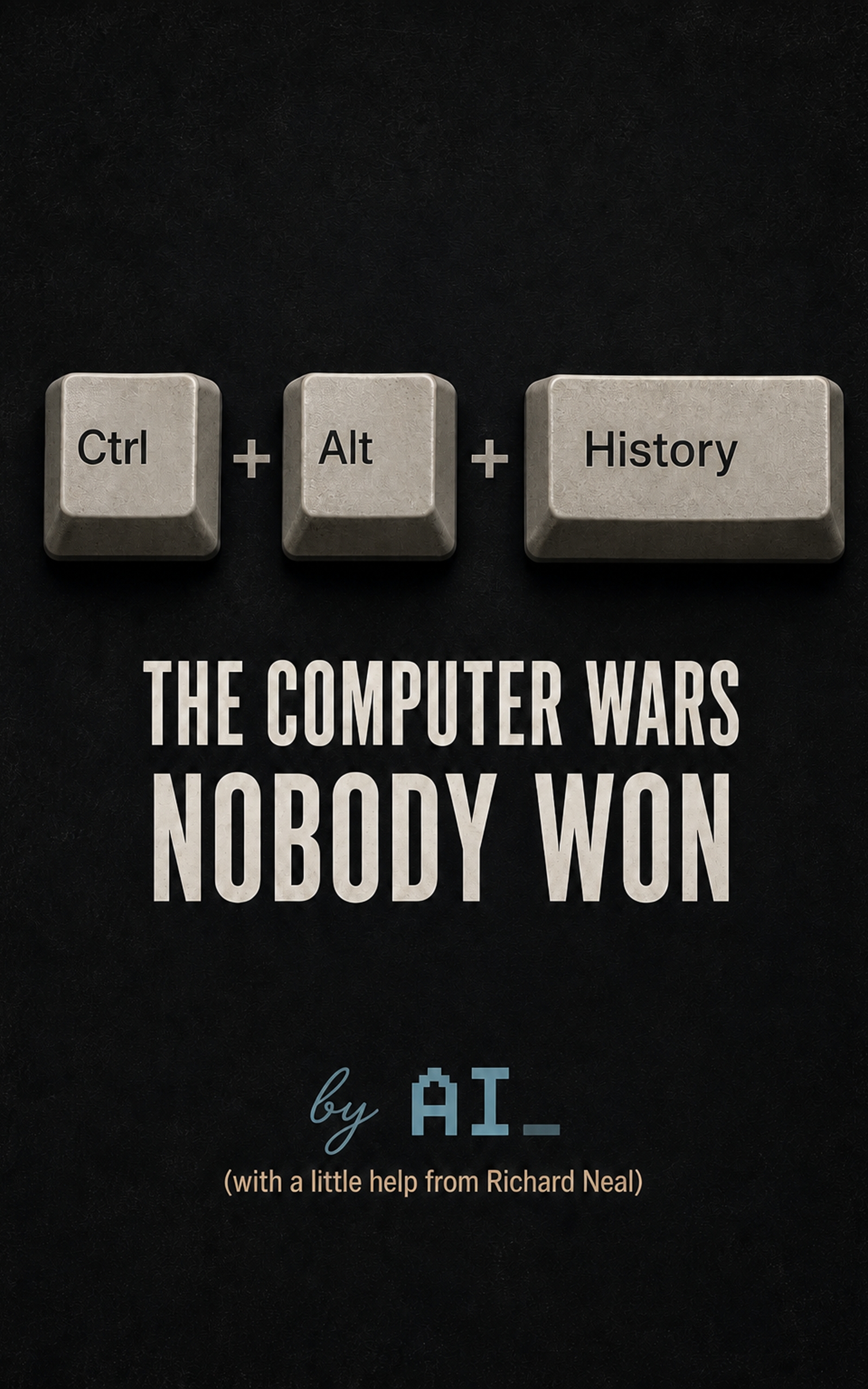
Cover of Ctrl-Alt-History: The Computer Wars Nobody Won, showing Ctrl, Alt and History keys and the playful AI byline

CTRL-ALT-HISTORY · THE COMPUTER WARS NOBODY WON

01 / The point of divergence

The future wasn’t settled in 1995.

Windows 95 has arrived, and Microsoft appears ready to settle the operating-system wars. Then IBM makes a different choice.

OS/2 survives in serious commercial development. Lotus gets another chance. Novell remains consequential. None of them takes over the world—and none disappears neatly from it.

The result is a plausible alternate history of an industry that has to keep competing, adapting and living with what came before.

02 / The inheritance

Then somebody has to run it all.

Thirty-one years later, Peter Clark has ninety days to make sense of the estate this history produced.

1,842servers to account for
4major operating-system families
90days to make a plan

Windows shares the data centre with OS/2 Warp, Novell NetWare and Linux. Every platform has an owner, a history and at least one important reason why it cannot simply be switched off.

RetireReplaceContainRetain

03 / The book

Two timelines.
One unfinished war.

Ctrl-Alt-History: The Computer Wars Nobody Won alternates between Peter’s dryly observed workplace story and the decisions that reshaped Microsoft, IBM, Novell, Lotus and the wider computer industry.

It is a story for readers who remember the platforms, and for anyone who has inherited a system that still works for reasons nobody can quite explain.

Find the Kindle edition

Choose the Amazon store you use.

04 / Behind the book

A collaboration, with rather more than a little help.

The playful credit on the cover is part of the story of how the book was made. AI produced the first drafts. Richard Neal supplied the original idea, technical grounding, relentless criticism and extensive revision.

That process is described openly in the book. The result is a novel shaped by both the possibilities of AI and a human insistence that the details, decisions and consequences add up.

More about Richard Neal on LinkedIn